How to organize an end of year teacher gift?
Organizing an end of year teacher gift can become complex when several parents need to agree on the amount, the choice and the management of the money pot. Financial and relational challenges are often underestimated in Switzerland.
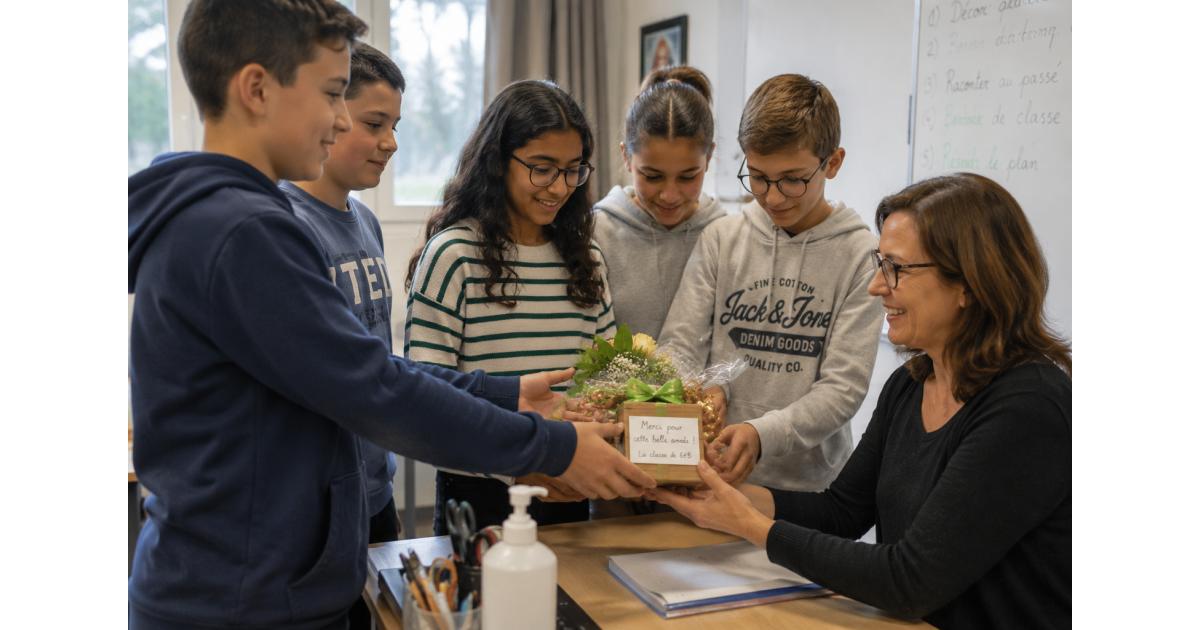
Organizing an end of year teacher gift has become a common practice in Swiss schools. As the summer holidays approach, parents want to thank the teacher for the past year. However, behind this collective intention, the concrete implementation of the end of year teacher gift can quickly become sensitive.
From the very first discussions between parents, several questions emerge. What amount should be suggested in CHF? Should a shared money pot be organized or should individual gifts be preferred? How can any implicit pressure on families be avoided? These questions, often pushed into the background, nevertheless constitute the core of potential tensions.
Why can an end of year teacher gift create tensions between parents
The first difficulty concerns the amount. In Switzerland, the financial situations of families vary greatly, even within the same class. Suggesting an indicative contribution can be perceived as an implicit norm. Conversely, leaving the amount completely free can create significant differences, generating discomfort if contributions become visible.
Social pressure plays a determining role. In class messaging groups, quick and enthusiastic responses can encourage other parents to align themselves, sometimes beyond their means. The end of year teacher gift, initially designed as a gesture of gratitude, can therefore become a source of relational tension.
Another sensitive point concerns participation itself. Some families choose not to contribute, for financial or personal reasons. When the list of participants circulates, the risk of exclusion or judgment increases. The collective initiative can then weaken the balance between parents.
Finally, the choice of gift raises disagreements. Some prefer a symbolic object accompanied by a message from the students. Others prefer a gift voucher or an envelope in CHF. An amount considered too high can be perceived as disproportionate, particularly in public institutions where caution remains important.
What are the logistical challenges of a collective gift at the end of the school year
Beyond relational aspects, practical organization represents a challenge. Traditionally, one volunteer parent collects contributions through bank transfer or cash. This method implies that the funds pass through a personal account, which can create discomfort.
Payment traceability then becomes an issue. Who paid? What amount was received? How should delays or mistakes be managed? When contributions are dispersed, tracking can quickly become time consuming.
Managing payments in CHF can also create problems when some families have foreign bank accounts or use different payment methods. Banking fees or delays can reduce the final amount available for the gift.
Finally, the question of transparency is central. Parents want to know the total amount collected while preserving the confidentiality of individual contributions. Finding this balance is not always obvious in an informal organization.
Should a fixed amount be set for an end of year teacher gift
In Switzerland, no official rule regulates the amount of an end of year teacher gift. Some classes suggest an indicative range, for example between 10 and 30 CHF per child. Others insist on completely free participation.
From a relational point of view, the absence of a mandatory minimum limits financial pressure. However, without guidance, some parents may hesitate about the appropriate amount.
Experience shows that clarity regarding the overall objective is often more important than the individual amount. Indicating that the money pot aims, for example, for a gift voucher with a total value of 600 CHF allows the initiative to be contextualized without comparing contributions.
How to organize a money pot for a teacher without using a private account
Faced with the limits of informal collections, more and more parents are turning to digital solutions. Structured solutions such as Happy Pot make it possible to centralize contributions without the money passing through a parent's personal account.
Within this framework, each family contributes directly to the money pot. The total collected is visible, while individual amounts can remain confidential depending on the chosen settings. This distinction reduces social comparison and preserves discretion.
Using a platform such as Happy Pot also makes it possible to ensure traceability of payments in CHF. Tracking is centralized and the closing of the money pot is formalized. This organizational neutrality limits misunderstandings and depersonalizes fund management.
How to preserve confidentiality and fairness between families
Confidentiality constitutes an essential lever to avoid tensions. When amounts are made public, differences can trigger unintentional comparisons.
Tools such as Happy Pot offer adjustable settings allowing users to choose whether contributions appear or not. This flexibility is particularly useful in multicultural classes, which are common in Switzerland.
It is also recommended to explicitly remind participants that participation is optional. The initial communication should specify that every contribution, regardless of the amount, is appreciated. This approach reduces implicit pressure.
By using a structured solution such as Happy Pot, parents avoid individual reminders. The money pot link is shared and everyone freely decides whether to participate or not. The collective initiative therefore maintains a respectful framework.
What type of gift should be preferred at the end of the school year
The choice of gift depends on the context of the class and the relationship with the teacher. The most common options remain the gift voucher, the envelope in CHF or a symbolic object accompanied by a card signed by the students.
In Switzerland, caution remains recommended regarding the value of the gift. Public institutions sometimes remind that an end of year teacher gift should not be considered as excessive gratification.
Specialized platforms such as Happy Pot facilitate the final delivery by generating a clear summary of the amount collected. This collective transparency makes it possible to close the initiative without ambiguity.
Towards a more peaceful organization of collective initiatives
The end of year teacher gift remains above all a gesture of recognition. However, without a clear framework, it can generate unnecessary tensions between parents.
The minimal formalization of rules, voluntary participation, confidentiality of amounts, transparency regarding the objective, constitutes a stability factor. Structured solutions such as Happy Pot fit into this evolution by providing a technical framework to a practice that until now has remained informal.
Organizing an end of year teacher gift therefore does not only concern the choice of gift. It is an exercise in balance between collective solidarity, respect for individual situations and rigorous management of funds in CHF. When organized carefully, this moment can become a genuine shared moment of recognition, without logistical or relational tensions.
Related articles



Ready to create your fundraiser?
Create your fundraiser in a few minutes and start collecting funds for your project.
Create a fundraiser